.jpg)
Private Equity Insights
Darien Group exists to bridge the gap between exceptional design capabilities and private equity communications. Our library of resources serves as a practical guide for firms looking to refine or redevelop their brand and ensure their story resonates with target audiences.

Featured Videos

.webp)
.webp)

Private markets have matured faster than most managers’ communications. Strategies have become more specialized, LP expectations more rigorous, and founder interactions more competitive. As the asset class evolves, firms are recognizing that brand, narrative, and digital communication are not aesthetic extras – they’re operating requirements.
This list highlights the top branding agencies that understand the unique needs of investment managers. Some focus on design, some on digital, some on investor communications, and some on portfolio-company brand execution. Each brings something different to the table.
1. Darien Group: The Specialist Branding Partner for All Capital Raising Firms
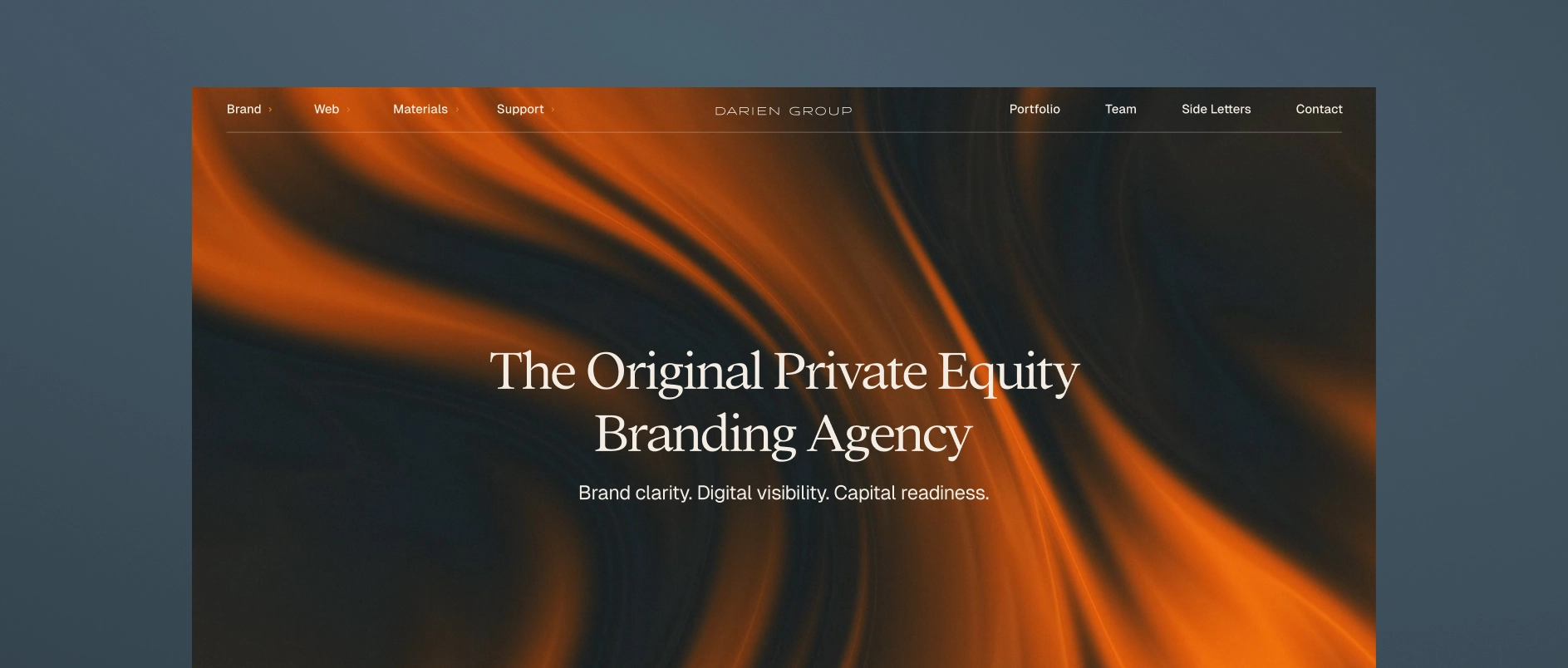
Darien Group is the only branding and communications firm built exclusively for investment managers. Our work centers on helping firms articulate a differentiated strategy, communicate clearly with LPs and founders, and present a credible, cohesive identity across every touchpoint.
What makes Darien Group different:
Private-markets fluency
We work exclusively with investment managers. That specialization translates into deep understanding of fund strategy, value creation, LP expectations, GP–founder dynamics, and the nuances of middle-market fundraising.
Narrative-first strategy
Our team helps clients articulate why their strategy works - not just what they do. Positioning, messaging frameworks, and story architecture are designed specifically for LP, founder, and intermediary audiences.
Institutional investor materials
Pitchbooks, PPMs, annual reports, quarterly updates, and fund overviews are built to an institutional standard, combining clarity, compliance alignment, and compelling structure.
Digital platforms built for today’s investors
We specialize in building websites and digital platforms that communicate a firm’s strategy with clarity and credibility. Our work includes partner bios, sector pages, insights hubs, and news systems - all designed to support deal sourcing, LP diligence, and founder engagement.
Modular content & communication systems
We develop messaging frameworks and repeatable content structures that help investment managers communicate consistently. These systems align websites, pitch materials, and ongoing updates so a firm’s story remains cohesive across every channel.
Boutique, high-touch model
Strategy, messaging, design, and execution are delivered by specialists who understand the expectations and pace of private-market teams.
Best for investment managers who need: A differentiated investment story, LP-ready materials, modern digital presence, and a partner who deeply understands private equity, private credit, and alternative investments.
2. Grady Campbell
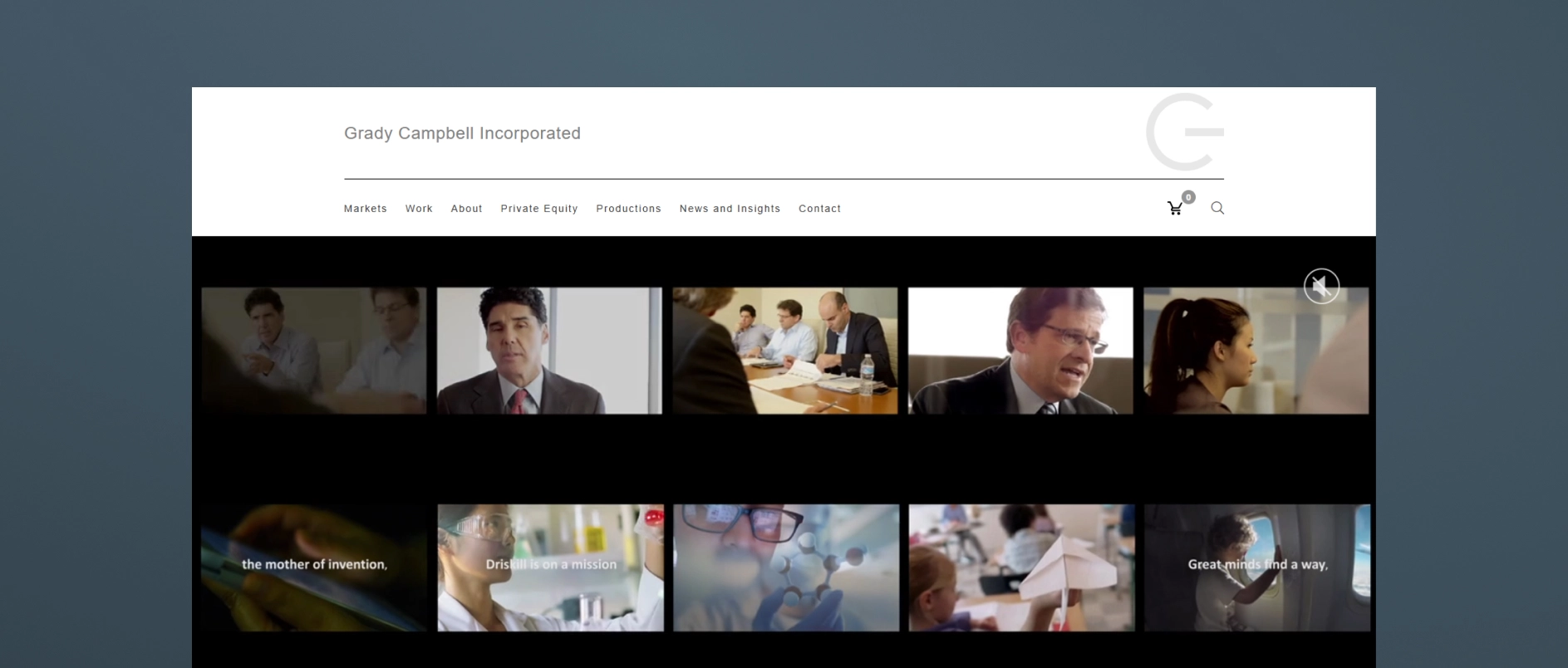
Grady Campbell is a full-service strategic branding and marketing agency with decades of experience, offering integrated brand, marketing, design, digital, content, and public-relations services. While they serve a broad set of verticals - from commercial banking to industrial, consumer, law, and technology - they maintain a dedicated private-equity vertical and specialized offerings for lower- and middle-market PE firms.
Best for Investment managers who need: integrated marketing programs, video and animation production, and public relations strategies.
3. 51 Labs
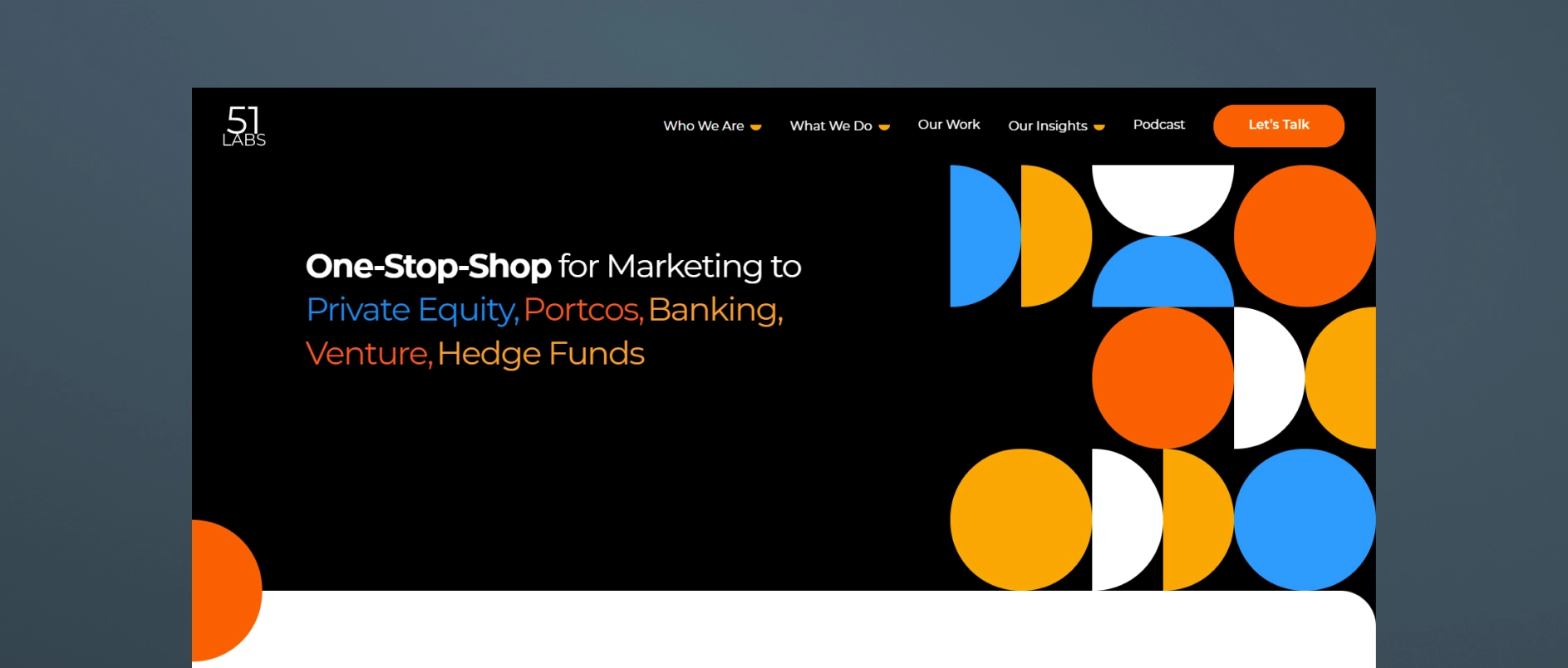
51 Labs is a modern marketing partner focused on private equity, credit, and finance firms. They combine financial-industry fluency with creative execution to deliver branding, websites, video, and content marketing. Their specialty is LinkedIn and video content, making them especially effective for firms seeking consistent visibility, platform + portfolio branding, and active engagement across digital channels.
Best for investment managers who need: a steady stream of LinkedIn content, video assets, and digital storytelling and unified branding across portfolio companies.
4. Bluetext
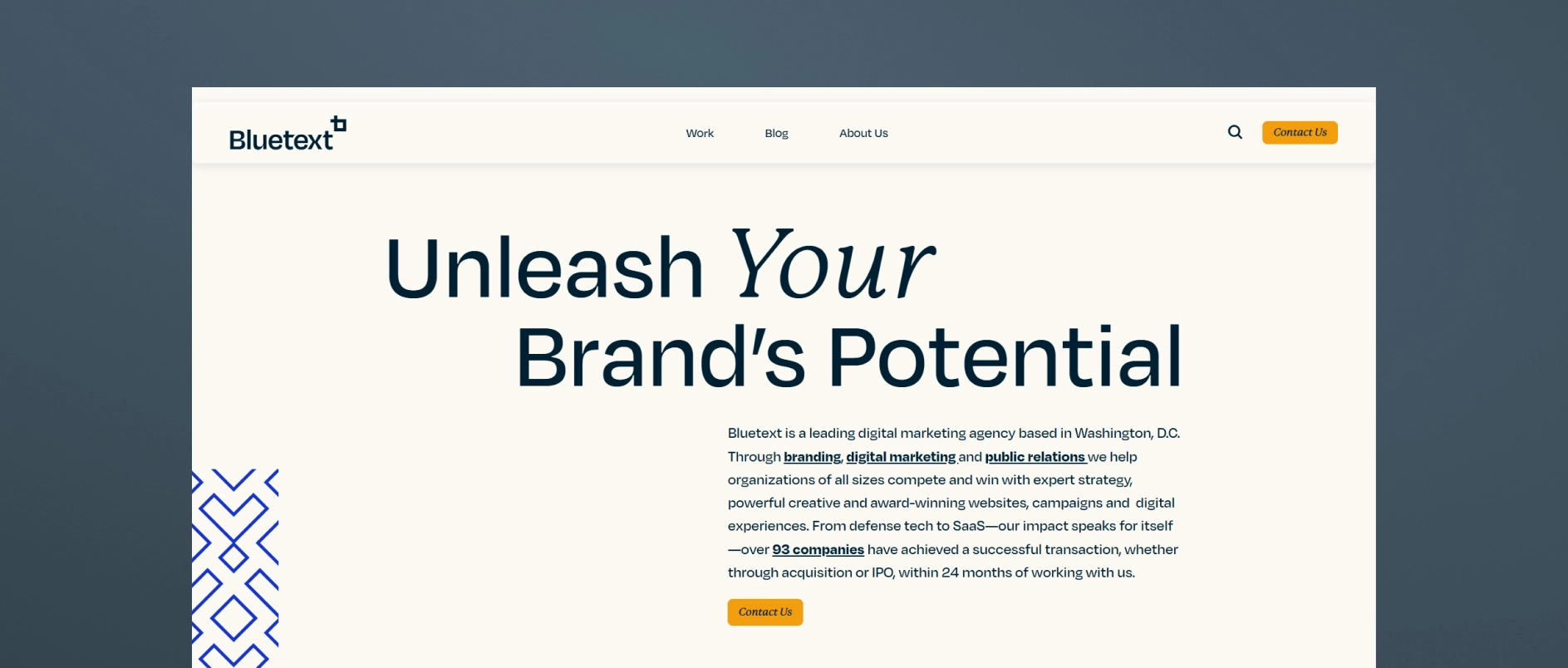
Bluetext is a full-service digital marketing and communications agency based in Washington, D.C., delivering branding, brand-revitalization, website design and development, content and digital marketing, thought-leadership campaigns, SEO, public relations, and demand-generation services.
Best for investment managers who need: pipeline building, deal-flow generation, and ongoing visibility.
5. Bladonmore
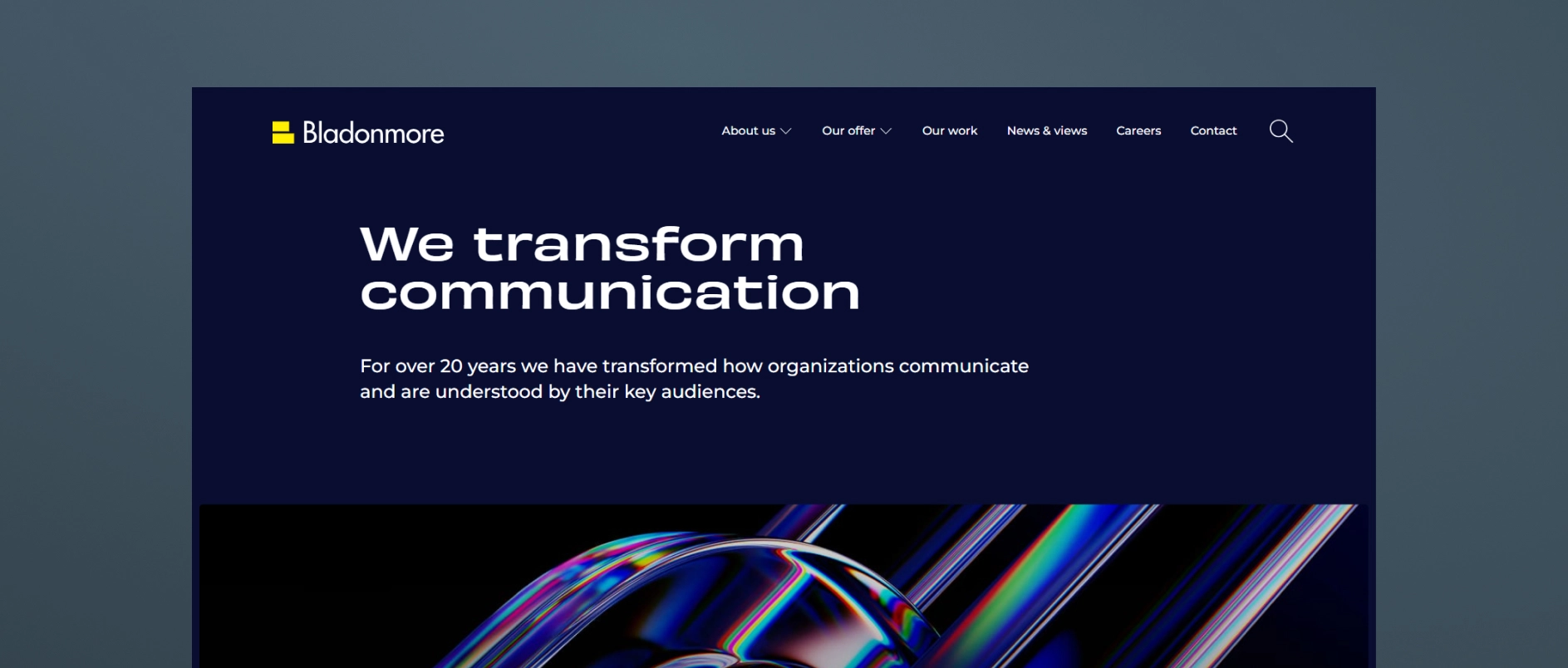
Bladonmore is a global stakeholder-communications agency with 20+ years of experience building brand, investor communications, digital content, film, and sustainability messaging for corporations, investors, family offices, and private-market clients.They combine strategy, creative design, digital execution, editorial, and multimedia to help clients articulate complex business stories.
Best for investment managers who need: institutional-grade investor communications, ESG/sustainability storytelling, global stakeholder messaging, public-market exposure, and reputation management.
6. The Durkan Group

The Durkan Group is a digital-focused design studio specializing in brand identity, UX/UI, and custom website development. They create clean, modern, user-centered digital experiences supported by thoughtful visual systems and structured messaging.
Best for investment managers who need: a prioritized user experience, intuitive navigation, and design-first identity over heavy content-generation or marketing campaigns.
7. FINE
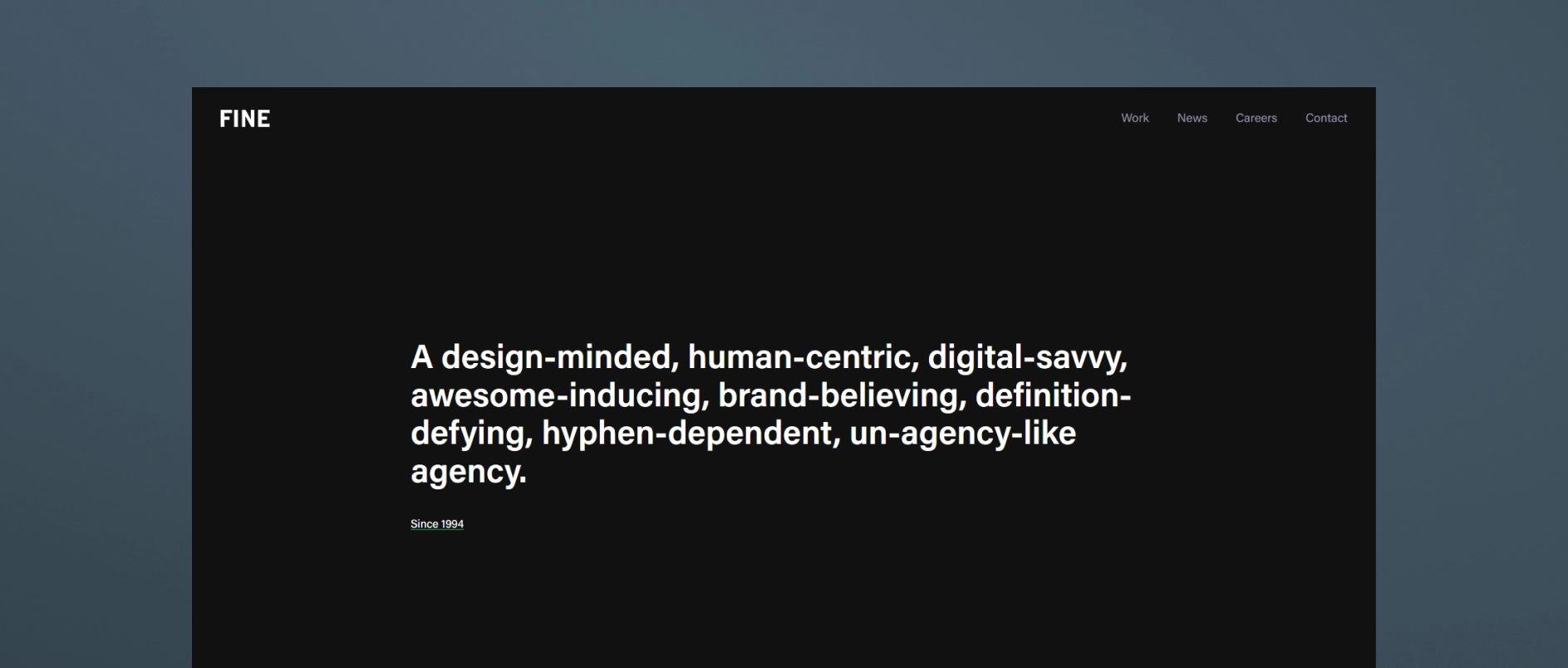
FINE is a high-end creative agency known for big-idea brand thinking, striking visual identity systems, and highly polished, immersive digital experiences. While not exclusive to investment managers, their portfolio spans hospitality, luxury, consumer, and high-growth brands - giving them a reputation for elevated, expressive, and design-rich work that stands out in any industry.
Best for investment managers who need: a bold, premium brand expression; prefer a more conceptual, high-aesthetic creative direction; or seek a visually memorable website and identity system drawn from world-class cross-industry design rather than traditional finance conventions.
8. Monogram Group
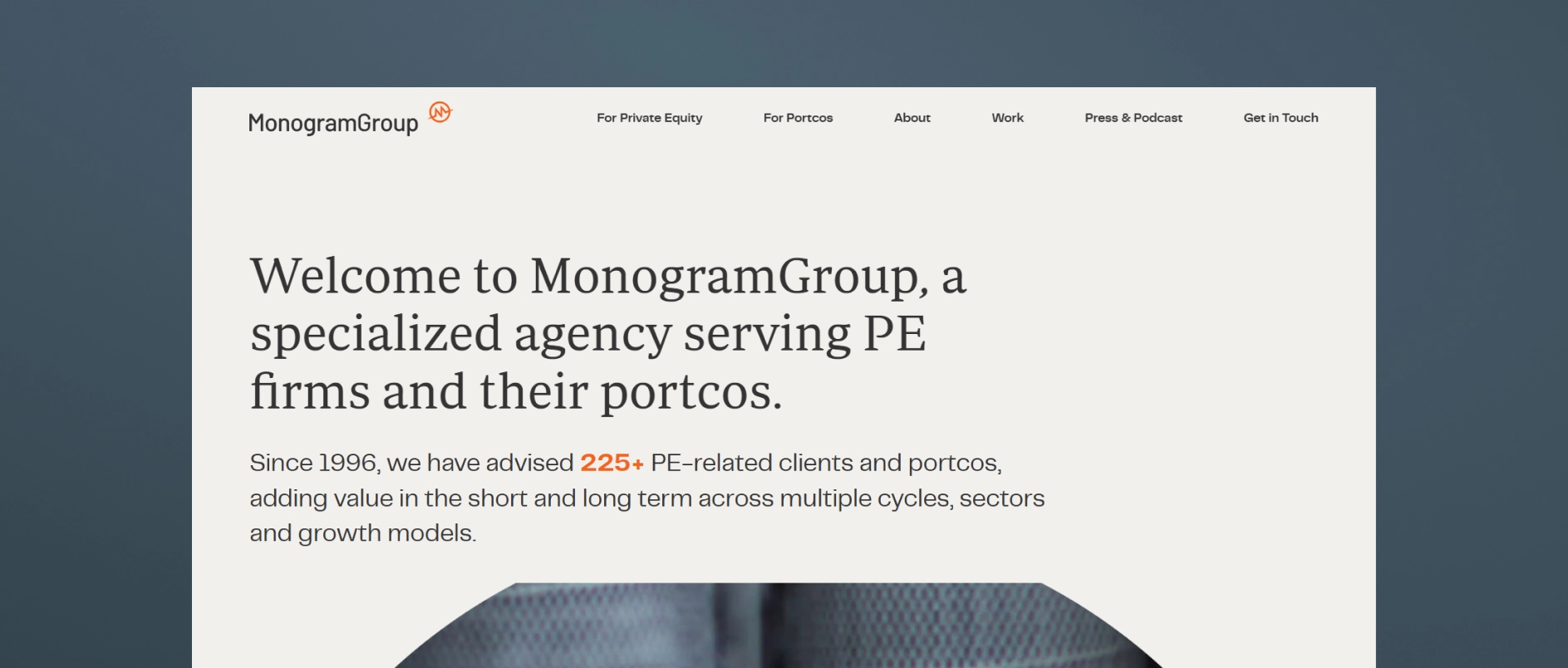
MonogramGroup is a seasoned agency (35+ years) that specializes in private equity and portfolio-company branding. They combine brand strategy, messaging, visual identity, web design, and go-to-market execution to help PE firms and their portcos sharpen positioning, support fundraising and deal sourcing, and scale brand value across the investment lifecycle.
Best for investment managers who need: an agency that can manage the full lifecycle: from pre-deal diligence and brand architecture through post-deal integration, portfolio-company identity, and exit preparation.
9. Consequently Creative
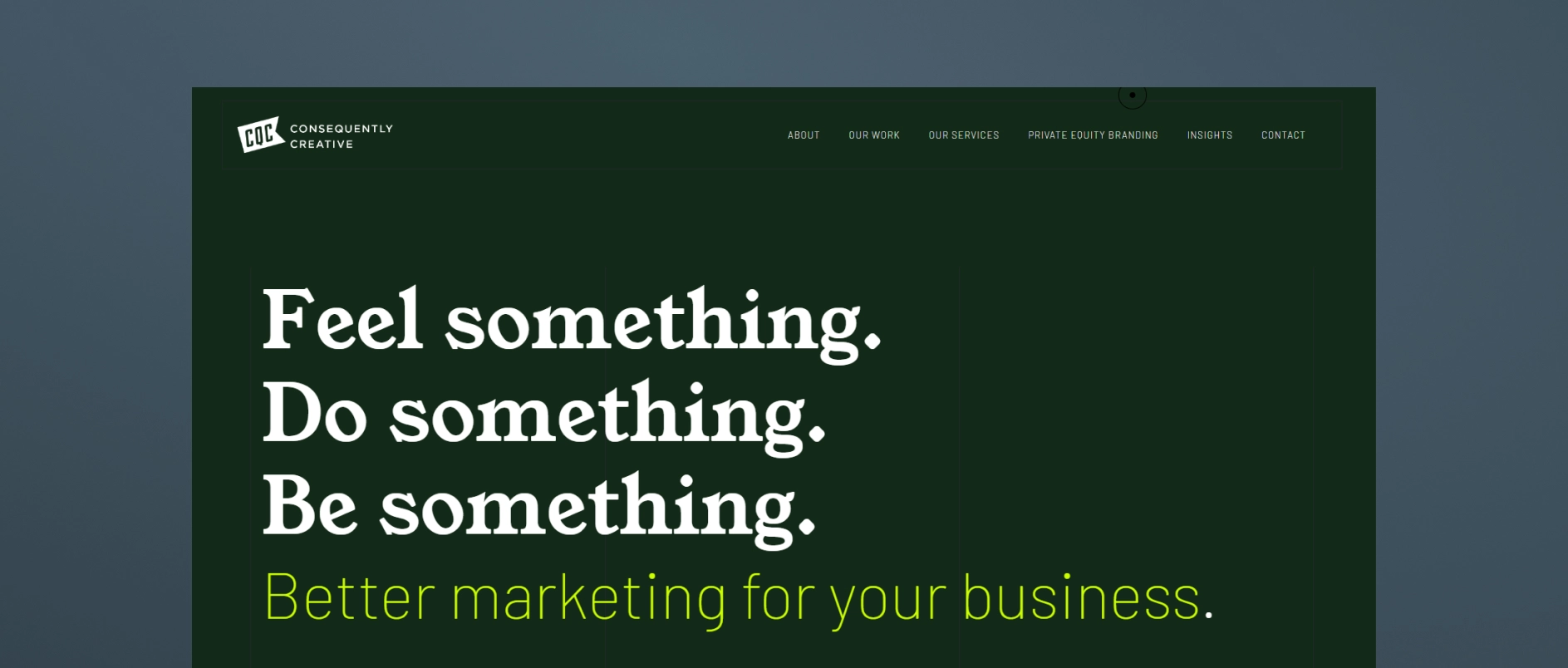
Consequently Creative is a boutique studio that focuses on crafting distinctive brand identities, visual systems, websites, and digital assets. Their work emphasizes storytelling through design, combining identity, layout, UX, photography, and motion to create brands that feel modern, cohesive, and expressive.
Best for investment managers who need: a boutique partner to develop brand and website assets with craftsmanship and attention to detail, or prefer a creative studio that can elevate the look, feel, and digital presence of both the firm and its portfolio companies without requiring full investor-materials support or institutional content strategy.
10. Clever Design

CleverDesign is a New York-based firm with decades of experience in web design, logo creation, and graphic design, and a history of working with private equity, investment banking, hedge funds, and other financial services clients. Their core offerings include websites, brand identity, logo design, pitchbooks / presentations, graphic design, and digital collateral.
Best for investment managers who need: a clean, professional, and finance-sector–tailored website or brand identity rather than full-scale content, marketing, or private-markets narrative support.


Build the Communications Infrastructure Internally or Rely on External Specialists?
Across the investment management landscape, a recurring pattern has begun to surface. Firms that once operated with a narrow product set and a correspondingly narrow communication function are now finding themselves in a radically different environment. Their strategies have multiplied. Their investor base has diversified. Their ambitions have increased. Their pace has accelerated. Yet their internal communication structures often remain calibrated to a far earlier stage of their evolution.
The result is a tension that is no longer theoretical. It becomes urgent. The question is no longer whether the firm should invest in its communications infrastructure. It is whether the firm can continue to scale without doing so.
When Growth Outpaces the Communication Architecture
In many firms, the tension appears in the same form. A single senior person or a very lean internal team becomes responsible for narrative development, sales enablement, reporting, white papers, pitch materials, fund launch collateral, and all digital communication. This model can sustain itself in the early years of a firm’s life. It becomes untenable once the research engine expands, product lines proliferate, and the audience becomes multidimensional.
Growth introduces narrative complexity. That complexity introduces production volume. And production volume introduces time pressure. Mature institutional investors expect clarity, frequency, and rigor. Machine learning firms face the added difficulty of explaining opaque processes in a way that is both truthful and non-reductive, yet accessible without compromising intellectual fidelity.
When firms reach this threshold, their communication demands shift from occasional projects to a constant flow of deliverables. A single deck becomes three derivative decks for different investor types. A quarterly report becomes a suite of linked materials. A core white paper becomes the basis for a year’s worth of content. The work begins to replicate itself. The internal structure does not.
The Threshold Moment: Build Internal or Buy External
Firms that grow this quickly often arrive at a fork in the road. The choices look simple, but the implications are structural.
One path is to build internally. This requires recruiting specialists across brand strategy, design systems, narrative development, data visualization, production operations, and content architecture. The firm invests in headcount, knowledge transfer, workflow systems, and the long onboarding curve required to understand the nuances of the strategy and research.
The other path is to partner with external specialists who already operate at institutional depth. In this model, the firm gains immediate access to strategic capacity, creative resources, and production bandwidth without needing to construct an internal department overnight. The learning curve becomes compressed because the agency already speaks the language of institutional capital, already understands fund structures, and already knows how to translate complex research into coherent arguments.
Both directions have merit. What matters is recognizing that not deciding is itself a decision. A communication architecture designed for a firm of sixty people cannot sustain a firm of three hundred.
Why Hedge Funds Face a Particular Challenge
For hedge funds and quantitative managers, this transition can be especially difficult. Many of these firms have historically been wary of public communication. The instinct toward discretion is not cultural ornament. It is an operational principle. Teams accustomed to opacity must now consider visibility. Firms built on research secrecy must learn selective transparency. The shift is not merely procedural. It is philosophical.
Yet the modern market demands a different posture. Institutional allocators expect more than performance. They expect process comprehension, risk transparency, and evidence that the research engine is both repeatable and differentiated. Quantitative managers cannot rely on mystique. They must explain the architecture of their process in a way that is intelligible to a sophisticated non researcher.
This introduces a second complexity. The communication task is not only high volume. It is technically demanding. It requires fluency in machine learning concepts, portfolio construction, model architecture, and prediction systems. A generic marketing function cannot reliably perform this translation. A poorly executed translation risks misrepresenting the intellectual foundation of the strategy.
Communication as an Institutional Capability
What emerges from these dynamics is a simple but underappreciated truth. Communication is no longer a support function. It is an institutional capability. The firms that articulate their research, process, and philosophy clearly are the firms that shape the allocator’s perception. The firms that produce consistent and credible materials are the firms that reduce friction in fundraising and product expansion. The firms that invest in narrative clarity are the firms that scale with coherence.
Firms that do not invest in this capability experience a predictable pattern. Teams become overextended. Reporting becomes reactive. Decks become a patchwork of inherited slides. White papers become aspirational rather than actual. Opportunities for thought leadership remain unrealized. The organization starts communicating at the pace of its bandwidth, not at the pace of its strategy.
Why External Partners Can Accelerate the Transition
External partners with deep sector fluency solve a particular kind of problem. They operate as an extension of internal leadership rather than an outsourced vendor. They bring experience across dozens of institutional managers. They arrive with a fully developed creative infrastructure. They carry the burden of production so that internal teams can carry the burden of decision making. They introduce new frameworks for narrative architecture, brand coherence, and content systems.
Most importantly, they buy time. They permit internal teams to shift from triage to strategy. And they enable the firm to build the communication capabilities it needs now, not the ones it might need in three years.
What This Reveals About the State of Institutional Branding
Across investment management, firms are confronting the same structural truth. Their intellectual capabilities have outgrown their communication capabilities. Their ambitions have outpaced their infrastructure. And their audiences have become more diverse, more sophisticated, and more demanding.
Institutional communication is no longer a matter of aesthetics. It is a matter of organizational strategy. It determines how the market perceives the firm, how allocators understand the process, how research scales into new products, and how the firm expresses its identity to a world that increasingly expects clarity rather than opaqueness.
Early conversations with firms at these inflection points often reveal the same insight. They do not simply need collateral. They need a framework. They need a system. They need a way to express themselves with discipline in the face of accelerating growth.
A strong communication architecture gives them that structure. It is not a marketing exercise. It is the foundation for how an institution understands itself, communicates its intelligence, and positions its future.



Why visual simplicity, risk framing, and trust cues shape how non-traded REITs are received
Non-traded REITs occupy a unique position in the real estate landscape: structurally institutional, but increasingly distributed through wealth channels where investor experience, communication style, and product literacy vary widely. This dual identity creates a branding challenge that many managers underestimate.
Institutional LPs typically engage materials through detailed analysis. Retail investors and their advisors may engage through a broader set of cues — clarity, structure, emotional tone, and trust signals that help them determine whether the product feels understandable and appropriate for their portfolio.
The disconnect that can arise is not about sophistication, but rather context: retail audiences interact with information differently, and their assessment process often begins with design and framing rather than deep-dive mechanics. Brands that account for this difference create a smoother path to comprehension and comfort. Brands that don’t often find their narrative obstructed before the product itself is considered.
At Darien Group, this is where we often see the greatest opportunities and the most common missteps.
1. Visual Simplicity Isn’t Cosmetic. It’s Interpreted as Clarity
Many managers entering the non-traded REIT space assume the design language of institutional materials translates naturally, but in our experience, that's not always the case. Retail-facing products benefit from a level of visual simplicity that helps audiences understand how to navigate the content before they evaluate what the content says.
The strongest examples in the category — including publicly visible leaders such as SREIT — lean heavily into:
- Clean layouts and readable type systems
- Minimalist exhibit design
- Clear sectional hierarchy
- Consistent card-based content blocks
These choices are not aesthetic flourishes; they create a cognitive environment where key ideas feel accessible. Simplicity signals intentionality, which in turn supports trust.
Managers often overestimate how much information must appear on a page for it to feel “institutional.” In non-traded REITs, disciplined reduction, not embellishment, is the more effective trust cue.
2. Risk Framing Must Be Structured, Not Softened
Non-traded REITs are disclosure-rich products by design. Retail investors and advisors expect transparency, but the sequence in which risk information appears meaningfully shapes how it is received.
Effective risk framing in this channel typically includes:
- A high-level articulation of what the REIT aims to deliver
- A balanced summary of risk considerations written in plain language
- Contextual exhibits that help translate how the strategy behaves across cycles
- A consistent format across reports, fact sheets, and microsites
What retail audiences value is not a reduction of risk language, but a responsible arrangement of it. Disclosures that appear chaotic, overwhelming, or visually disjointed can unintentionally heighten perceived risk, even when the content itself is standard.
3. Disclosure-Heavy Design Requires Intentionality
In the institutional world, extensive disclosures are expected at the end of every document. In the non-traded REIT environment, disclosures often accompany nearly every asset-level chart, performance reference, and distribution statement.
This density makes design essential.
Managers who treat disclosures as an afterthought often end up with:
- Layouts that feel crowded
- Pages where the eye doesn’t know where to land
- Important ideas overshadowed by formatting issues
By contrast, leader-class programs tend to:
- Integrate disclosures harmoniously along the bottom grid
- Use scale, spacing, and typography to maintain balance
- Keep the primary narrative readable and intact
Good disclosure design doesn’t make a REIT look promotional; it makes it look prepared.
4. Trust Cues Are Accumulative, Not Singular
Retail trust is built across moments, not from a single design element or line of copy. When we audit non-traded REIT programs, the strongest performers usually exhibit consistency across:
- The homepage, which explains the strategy succinctly
- The fact sheet, which is navigable in under a minute
- Quarterly updates, which follow a repeatable structure
- Portfolio pages, which avoid overwhelming detail and highlight what matters
- Subscription pathways, which feel intuitive and friction-light
Trust is often compromised when even one of these elements diverges stylistically or structurally from the others. A cohesive ecosystem communicates reliability.
This is where many managers misjudge perception. Retail audiences rarely articulate these inconsistencies, but they do feel them. Design alignment across touchpoints communicates professionalism just as powerfully as performance charts.
Closing Thought
Non-traded REITs operate in an environment where branding and communication need to support the underlying strategy — not distract from it or prevent an investor from engaging with it. The managers who succeed in this channel are not those who oversimplify their story or over-polish it, but rather those who design for comprehension, structure for transparency, and communicate with calm authority.
Retail investors and advisors are not evaluating the same way institutions do. They are evaluating in a way that is appropriate to their role, their workflows, and the medium through which these products are distributed.
In a crowded landscape, brands that understand this distinction and build with intention create an immediate advantage.


Marketing inside an investment firm used to be a narrow function focused on decks, conferences, and quarterly updates. In 2026, it is a digital, data-driven, AI-enabled capability that influences fundraising, deal sourcing, recruiting, and platform visibility.
To operate at an institutional standard, private equity and alternative investment managers now need a defined marketing technology stack. The right tools do not replace narrative clarity or strategic messaging, but they make it possible to execute consistently, measure effectively, and scale intelligently.
Below is the 2026 marketing tech stack we recommend for private equity, credit, and real assets managers - including proven tools, emerging platforms, and best practices for integrating them into your workflow.
1. Core Infrastructure
These platforms serve as the foundation for all marketing, IR, and digital workflows.
CRM Systems (Deal + Investor Pipelines)
Most common platforms:
- DealCloud
- Salesforce
- Affinity
- HubSpot (increasingly used by emerging managers)
Best practices
- Maintain strict CRM hygiene
- Integrate with email and marketing automation
- Tag LPs and founders by geography, strategy, and profile
- Build dashboards that support both IR and deal teams
2. Website & Digital Experience
Your website is the primary discovery channel for LPs, founders, executives, and talent. In 2026, it must be fast, modern, structured, and optimized for AI.
CMS Platforms
- Webflow (best-in-class for design control and speed)
- WordPress (flexible, plugin-heavy, requires disciplined development)
Key Website Tools
- Google Analytics 4 – traffic insights
- Google Search Console – index health and performance
- Semrush or Ahrefs – SEO analysis and keyword tracking
- Hotjar – user behavior heatmaps and journey tracking
- Cloudflare – security, caching, performance optimization
- Schema markup tools – essential for AI visibility
Best practices
- Create dedicated sector pages for SEO
- Implement schema for leadership, organization, FAQ, and articles
- Use a clear information hierarchy that mirrors your capital narrative
- Prioritize speed and mobile optimization
- Maintain consistent brand systems across all pages
3. Content, Brand, and Design
Content is now a competitive advantage. Thought leadership, case studies, insights, and sector commentary drive credibility and visibility.
Design + Asset Creation Tools
- Figma – primary tool for modern websites and brand systems
- Adobe Creative Cloud (Illustrator, InDesign, Photoshop)
- Canva (for internal teams needing a lightweight tool)
- Lottie / After Effects (motion graphics for digital)
Content Production Tools
- Notion or Confluence – internal content hub
- ChatGPT / Claude – AI support for research and first drafts
- Grammarly – editorial consistency
- Descript – audio/video transcription for repurposability
Best practices
- Build a brand system early (typography, color, charting rules)
- Standardize data visualization across decks and reports
- Maintain an internal content library for reuse
4. AI + Automation (The 2026 Game-Changer)
AI is no longer optional. It accelerates research, transforms content workflows, and improves SEO and discoverability.
AI Tools for Investment Managers
- ChatGPT Enterprise – long-form content, summarization, frameworks
- Perplexity Pro – research, source validation, benchmarking
- Jasper – automated content variations (use cautiously)
- Claude – rewriting, long context handling
- Writer / Grammarly Business – tone and style consistency
AI Use Cases
- Drafting thought leadership outlines
- Turning partner notes into publishable insights
- Updating pitchbook content for versioning
- Creating persona-based messaging variations
- Summarizing quarterly letters into social posts
Best practices
- Always maintain human oversight
- Train AI tools on your brand systems and tone
- Apply AI to production, not strategy
5. Marketing Automation & Distribution
Your content and updates need to reach the right audiences with the right cadence.
Distribution Platforms
- Mailchimp or Campaign Monitor – newsletters and LP content
- HubSpot Marketing Hub – nurture sequences and segmentation
- LinkedIn Campaign Manager – organic + paid amplification
- Buffer or Hootsuite – scheduling and analytics
- Zapier – cross-platform workflow automation
Best practices
- Use A/B tests for subject lines targeting LPs
- Segment LP, founder, and talent audiences
- Maintain a quarterly communications rhythm
- Track performance of all outbound content
6. Analytics & Measurement
Institutional marketing requires data. Insights should drive content investment, website strategy, and channel prioritization.
Analytics Tools for Investment Managers
- GA4 – traffic, engagement, user pathways
- Semrush – keyword visibility and competitive analysis
- Looker Studio – custom dashboards
- HubSpot or Salesforce reporting – audience segmentation
Best practices
- Build dashboards by persona: LP, founder, recruit
- Track leading indicators such as:
– sector page traffic
– time on team bios
– content downloads
– LinkedIn referral traffic - Use analytics to prioritize future content creation
7. Video, Events, and Thought Leadership Amplification
Video and events are becoming LP-friendly, founder-friendly, and increasingly expected.
Video Tools
- Vimeo or Wistia – secure hosting + analytics
- Riverside – high-quality remote recording
- Descript – editing and repurposing
- Luma or Runway – AI enhancements
Event Tools
- Zoom Webinars or ON24 – virtual events
- Eventbrite – registration and tracking
- Slido – audience engagement
Best practices
- Use video to humanize the firm
- Prioritize founder and portfolio interviews
- Turn every event into 4–6 additional content assets
The 2026 Best Practices for Building a Private Equity Marketing Tech Stack
1. Build your narrative first, then your tools
Software enhances clarity; it does not create it. Begin with messaging.
2. Use fewer tools, used well
Overstacking leads to inefficiency. Start with core systems.
3. Train the full team, not just marketing
IR, deal teams, and operations should understand how the tech stack supports their role.
4. Build for AI discoverability
Schema, metadata, and structured content will drive future search.
5. Prioritize measurement
Every action should map back to visibility, credibility, or conversion.
Closing
The modern private equity firm - and increasingly every investment manager - needs a marketing tech ecosystem that is fast, integrated, and built around a clear strategy. The tools above provide the infrastructure needed to execute consistently, measure effectively, and communicate with institutional clarity.
Darien Group partners with investment managers to build the brand systems, websites, content engines, and communication frameworks that make this tech stack truly valuable. If you are evaluating your digital infrastructure for 2026, our team can help define the right strategy and roadmap.



Real estate platforms operating across multiple geographies, verticals, and operating models face a unique communication challenge: the more sophisticated the business becomes internally, the harder it is for external audiences to understand quickly and confidently.
Nowhere is this more visible than online.
Websites are often the first place LPs, advisors, consultants, lenders, or operating partners try to understand the structure of a platform. But for multi-market firms, the digital narrative frequently becomes muddled — too much detail too early, unclear strategy distinctions, or navigation that mirrors internal org charts rather than how an outsider evaluates the platform.
What these firms need is not more information. They need a clearer system for translating operational complexity into a structured, intuitive digital experience.
When the architecture is intentional, a multi-market platform can present itself with the same discipline it applies to investment underwriting and execution.
Visitors understand the strategy faster.
They find what they need without friction.
And the narrative that emerges feels confident, coherent, and institutional.
Why Complexity Creates Friction Online
Multi-market firms often run into the same patterns of confusion:
1. Geography, verticals, and strategy blur together.
A platform may operate across regions, asset types, and business lines, but if these distinctions are not clearly defined on the website, audiences end up guessing how the pieces fit.
2. Operational strengths stay buried.
Execution capabilities often sit at the center of what makes these platforms strong — operating partners, vertical integration, repeatable playbooks — yet these elements are rarely surfaced with enough structure or visual clarity.
3. Navigation mirrors the internal org chart instead of audience logic.
Teams think in terms of divisions. Visitors think in terms of first principles: what do I need to understand right now? Those two logics often diverge.
4. Portfolio pages overwhelm instead of orient.
High-volume platforms often display dozens of investments without filters, sequencing, or standardization, forcing users to scroll endlessly rather than interpret the footprint.
These friction points often come from good intentions — firms want to be comprehensive — but without the right design patterns, “comprehensive” becomes “confusing.”
Three Ways Digital Structure Can Bring a Multi-Market Story Into Focus
Drawing from our past work helping real estate platforms refine their digital narratives, three patterns consistently help translate complexity into clarity.
1. Begin With a Clear Organizational Map — Not a List of Strategies
Before diving into offerings, audiences need a mental model of the platform:
What markets does the firm serve? What verticals does it operate in? How do these units relate?
Strong multi-market websites do this upfront.
They often use:
- A simple articulation of the firm’s focus areas
- A visual or textual explanation of how those areas connect
- A clear distinction between investment approaches and operating capabilities
- Light scaffolding that orients without overwhelming (e.g., three pillars, two segments, or a defined ecosystem)
This gives the visitor a frame for interpreting everything that follows — especially important for platforms whose value proposition lies in cross-pollination between markets or business lines.
2. Use Information Hierarchy to Let Each Audience Self-Navigate
Multi-market platforms inevitably serve different stakeholders:
Institutional LPs, HNW individuals, family offices, advisors, partners, lenders, local communities, operators, and prospective talent.
They don’t all need the same depth, and they don’t all start from the same question.
Digital hierarchy helps solve this by sequencing content in a way that allows for intuitive self-selection:
- High-level framing first
- Strategy or vertical-level detail second
- Footprint and portfolio third
- Team composition fourh
- Granular information (team, capabilities, metrics, case studies) available but not obstructive
This kind of hierarchy is one of the strongest signals of maturity. It communicates that the platform understands how audiences evaluate real estate managers, and doesn’t require visitors to forage for clarity.
One especially important insight is the value of filterable, standardized portfolio structures. When investments are sortable by geography, sector, or status, and each entry follows a consistent format, users grasp scale and focus at a glance. Applied more broadly, this same logic enhances clarity across the entire site.
3. Present the Portfolio in a Way That Makes the Platform Legible
For multi-market firms, the geographic footprint is often a core part of the story, but it rarely gets the structured treatment it deserves. Instead of scattered references across pages, the strongest platforms:
- Consolidate geographic presence into one coherent visual or section
- Standardize how markets are described
- Connect geography back to the strategy (not just as a map, but as a narrative device)
- Avoid asset-photo overload in favor of selective, purpose-driven visuals
Executives may think of footprint in terms of history or deal volume; visitors need to understand focus, pattern, and repeatability. Design structure is what reveals that.
When to Use Sub-Brands — And When Not To
Some multi-market platforms consider sub-brands for certain verticals or specialized businesses. The question is not whether sub-brands are “good” or “bad,” but whether they help clarify — or complicate — the story.
Sub-brands make sense when:
- A vertical has a distinct operating model
- An approach requires a different disclosure framework
- A specialized audience needs tailored messaging
- There is genuine differentiation in market positioning
In these cases, sub-brands should feel like a natural extension of the parent identity, not a departure from it.
This design principle allows sub-brands to create clarity without sacrificing cohesion. A parent brand establishes authority and continuity, while sub-brands provide specificity where it’s truly needed.
Sub-brands do not make sense when:
- They fragment what should be a unified narrative
- They create confusion internally or externally
- They obscure the core strategy instead of illuminating it
More often than not, platforms benefit from better hierarchy, clearer segmentation, and more intentional UX long before they benefit from formal sub-branding.
"A well-designed sub-brand shouldn’t compete with the parent brand. It should harmonize with it — visually, structurally, and tonally — so the overall ecosystem feels intentional rather than fragmented." — Anastasiia Kharytonova, Head of Design at Darien Group
Why This Matters for Institutional Audiences
Institutional allocators and advisors don’t expect a multi-market story to be simple — they expect it to be coherent. A website that reflects operational discipline signals organizational discipline. A messy, unclear, or overly asset-heavy website signals the opposite.
When multi-market platforms get the digital narrative right, they:
- Reduce interpretive burden
- Highlight strategic focus without oversimplifying
- Make scale legible
- Clarify the roles of each strategy or vertical
- Create consistency across audience groups
- Strengthen perceived maturity
In a category where differentiation is increasingly defined by clarity, not volume, a well-architected digital experience becomes a strategic asset.
The Takeaway: Complexity Isn’t the Problem. Communication Is.
Multi-market real estate platforms have rich, powerful stories, but those stories need structure to land.
A website is more than a brochure. It is the architectural expression of the firm’s strategy.
When the digital environment:
- establishes a clear organizational map,
- uses hierarchy to guide different audiences, and
- presents the footprint in a way that’s genuinely interpretive,
the platform becomes legible, compelling, and institutionally credible.


In those opening moments, visitors begin forming an early sense of the firm — its focus, its maturity, and whether the broader story feels clear enough to explore.
Real estate investment managers may underestimate the role the homepage plays in shaping how their platform is understood. It isn’t always the first touchpoint in an investor’s process, and it’s rarely the most comprehensive, but it is one of the clearest places where someone can see how a manager organizes its strategy, articulates its perspective, and signals its level of institutional readiness.
Visitors aren’t looking for detailed answers in those first seconds. They’re looking for basic orientation: a sense that the firm communicates with clarity, that its strategy will be straightforward to understand, and that the platform has the maturity to support a more substantive conversation.
When that foundation isn’t there, everything downstream feels heavier.
When it is there, the rest of the narrative has room to land.
The strongest homepages don’t attempt to deliver the full story upfront. They establish clarity early, set a confident tone, and make it easier for the broader story to take hold.
1. A Headline That Sets the Direction, Not the Whole Story
Many real estate investment managers try to fit too much meaning into a homepage headline. The instinct makes sense: strategies in this category are often nuanced, and leaders want to communicate that nuance quickly.
But the headline isn’t where the full story lives. Its job is to set the firm’s direction — the posture, perspective, or core principle that shapes how the platform approaches opportunities.
The most effective headlines are concise and steady. They signal whether the firm leans into partnership, discipline, operating depth, or long-term perspective. And in real estate, they help distinguish an investment manager from the developer-style language that still shapes much of the category.
A good headline anchors the first impression without trying to explain everything. It creates space for the rest of the narrative to unfold.
Take GEM Realty Capital as an example, with a website developed in collaboration with Darien Group. Their homepage headline — “Innovation that Endures” — gives visitors an immediate sense of the firm’s posture without trying to cover the full scope of its strategy.
The line conveys durability and forward focus. It creates room for the subsequent content to explain how the firm participates in both private and public real estate markets.
It’s a restrained, orienting headline that sets the tone without overstating.
2. Sub-Headline: A Supporting Line That Grounds the Platform
If the headline sets the direction, the sub-headline provides the initial structure beneath it. This is where visitors begin to understand how the firm thinks and what principles guide major decisions.
For real estate investment managers, this often means hinting at a cycle-informed perspective, a disciplined or research-driven approach, the importance of operating capabilities, or clarity in how opportunities are evaluated, underwritten, and managed.
The sub-headline shouldn’t be complicated. Its purpose is to help the homepage feel grounded, coherent, and intentional, giving visitors a sense of what to expect as they move deeper into the site.
Continuing with GEM Realty Capital, their sub-headline — “GEM Realty Capital is a strategically integrated real estate investment firm specializing in private and public market opportunities.” — provides the grounding structure the headline intentionally avoids.
It gives visitors a clear sense of the platform’s scope and how the firm positions itself within the real estate landscape. The line introduces the integrated nature of the strategy without overwhelming the reader with detail.
It’s a straightforward, steady way to establish context before the rest of the homepage expands on the firm’s philosophy, platform, and areas of focus.
3. Strategy Markers That Clarify the Approach and Invite Deeper Exploration
Real estate investment strategies rarely lend themselves to a simple description. Market selection, operating capabilities, basis discipline, and risk posture all shape how the platform interprets opportunity and creates value. These layers take time to understand fully, and the homepage is not the place to unpack them all; however, it can provide visitors with a clear starting point.
Strategy markers serve that purpose. They highlight, at a high level, how the team selects markets, approaches underwriting, manages capital structure, and uses operating capabilities to support performance.
For real estate investment managers, these cues also help distinguish an investment identity from a developer narrative — an important distinction in a category where the line between investment strategy and project execution is often blurred in the broader market.
Strategy markers should encourage visitors to continue into the strategy page, the portfolio, the team, or the market view, for example, where the details naturally deepen.
When visitors grasp the foundation quickly, the rest of the platform becomes much easier to explore.
4. Navigational Clarity That Reflects Organizational Maturity
Website navigation often reveals just as much about a firm as the copy itself. The structure of the homepage — what is easiest to find, how information is grouped, how intuitive the layout feels — serves as an early impression of how the organization operates.
Visitors should be able to locate the essentials immediately: the investment approach, market focus, portfolio or case study context, the team, and any broader view of the current environment.
Clear navigation also helps distinguish an investment manager from a developer-style site, where content is often arranged around individual assets rather than around the investment engine behind them.
Good navigation doesn’t just support user experience. It reflects how the firm thinks.
5. User Experience That Supports Different Types of Visitors
Different visitors arrive at the homepage with different objectives. Some want a straightforward sense of the firm’s strategy. Others are returning after a meeting, looking to validate what they heard. Many will review the team and portfolio pages in depth, getting a sense of who is driving the strategy and what the firm's track record looks like.
A well-structured homepage supports all of these paths without needing to call them out directly. It simply gives each type of visitor an intuitive way to move through the content.
This usually means offering a clear route to the strategy, an accessible introduction to the team, and a simple way to understand the firm’s markets, areas of focus, or portfolio context. Just as importantly, it shows how these elements relate to one another across the broader platform.
For real estate investment managers, this level of clarity helps visitors understand how the firm approaches opportunities and how it thinks about its work before they reach more detailed materials. Even without performance information, the structure of the homepage can communicate a great deal about the firm’s discipline, priorities, and overall investment orientation.
6. Imagery That Reinforces the Investment Identity
Imagery carries uncommon weight in real estate. It can instantly suggest a certain strategy, risk profile, or type of platform. It can also misrepresent the firm if it’s not used intentionally.
For real estate firms, homepage imagery should reinforce the firm’s intended identity, whether primarily investment-focused, development-oriented, or hybrid in nature. Architectural abstraction, structural detail, or selective use of asset photography can help signal that focus in a clear and intentional way.
When property images are used, they should meaningfully and directly support the narrative. The visual language should feel intentional, restrained, and aligned with how the firm wants its strategy to be interpreted.
The Role of Scale, Experience, and Cycles
A few concise indicators of scale or experience can strengthen the homepage, especially in a cyclical category like real estate.
Years in operation, national footprint, realized activity, or historical transaction experience can help visitors understand the platform’s depth without overwhelming the page.
Experience across different market environments adds further context. Investors and advisors often look for signs that a team has operated in varying conditions, and even modest numerical cues can communicate that effectively.
These elements should add confidence without crowding the page. Their job is to reinforce, not dominate.
A Homepage That Helps the Story Land
A homepage is not where the full narrative should be told. But it does shape how easily someone can understand that narrative once they begin to explore it.
For real estate investment managers, whose strategies often involve nuance and differentiation that is not always obvious on first glance, the homepage plays a more meaningful role than many firms assume. It sets the frame for how the platform’s discipline, clarity, and maturity are interpreted.
The aim is not to reveal everything upfront. It’s to give the story a clear, confident starting point.
When the homepage does that well, it strengthens everything that comes after.
